
Van Vessem
If You’re a Man Fucked Off With Life — I Can Tell You Exactly Why.
Because it’s not you. It’s the system. And I buried my brother because of it.
Founder, Stoic God
Brother Thomas - Lost to Suicide, 1997
Former UK Police Officer
Masters in HR
Author
Founder, Stoic God
Brother Thomas - Lost to Suicide, 1997
Former UK Police Officer
Masters in HR
Author
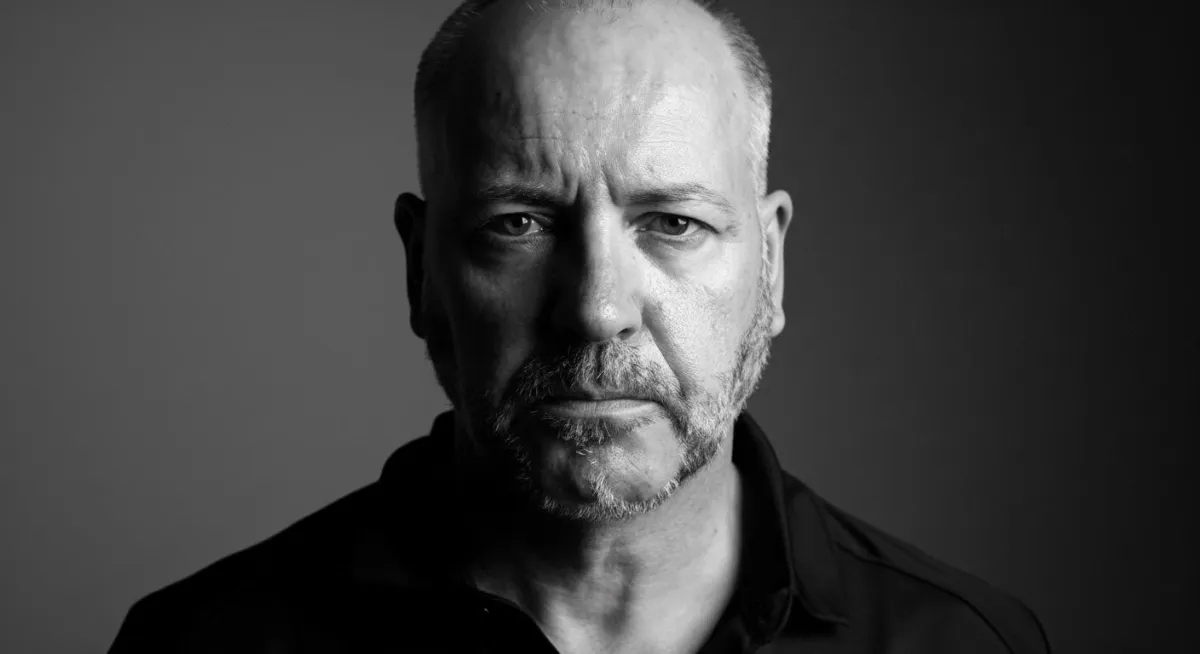
Age 33 ---------------------------------------------------
Thomas
My brother died by suicide. The therapeutic system that was supposed to help him didn't. This book carries his name — Van Vessem is the village where he's buried. Writing under this name rather than hiding behind a pen name is not branding. It's accountability to him.
How a Man Gets From There to Here.
Not a hero's journey. An ordinary man's survival — which is precisely why it works for you.
Age 5 ---------------------------------------------------
The First Fracture
A father beating a mother. Age five. The system's first contact with the household I grew up in — and it arrived after the damage was already done. I learned early that institutions claim to protect. What they actually do is show up late, file a report, and call it intervention.
Age 7–14 ---------------------------------------------------
The Second Fracture
A hateful stepmother. A father who worked hard but whose second love was the betting office. Estranged from my mother. The house was not a safe place. To cope, I used to watch burials in the cemetery opposite — daily. Sitting on the garden shed roof, watching strangers grieve. It was the first time I understood that other people's pain was worse than mine, that life was short, and that suffering was not personal — it was the human condition. I didn't know then that the Stoics had a name for it: memento mori. I just knew it helped.
Age 1997–2005 ---------------------------------------------------
Police Officer — South Yorkshire
Seven years as a UK police officer. I watched institutions fail the people they existed to protect — on an industrial scale. I saw what happens when systems prioritise their own survival over the people inside them.
Age 56–60 ---------------------------------------------------
Work Coach, DWP
Four years across a desk from men who had lost the job, the marriage, the house, or all three. Men with no backup and nothing coming. I had a script I was supposed to read them and a set of boxes to tick. Neither of those things ever rebuilt a man. What I watched actually work was older than the department by two thousand years and appeared nowhere in the training manual. I read Marcus Aurelius on my lunch breaks until the pages fell apart. Then I started again.
Age After ---------------------------------------------------
Masters in HR
I went back into education in my fifties — a Masters in HR, and the oldest man in the room by a decade. My BA in Politics and Economics had already given me the framework to understand not just that the system was failing men, but the precise economic logic driving it. The Masters confirmed it from the inside: lecture after lecture teaching the precise opposite of what I had watched actually work. Therapeutic dependency as default. Emotional processing over character development. I didn't leave angry. I left with a mission and the academic vocabulary to prove it.
The Name
For years I planned to write this as Marcus Staal. A pen name. Safe distance. Then my wife said I needed to use my real name — that hiding was part of the prison. My gym friends said the same. Sometimes the people closest to you see the bars before you do.
Van Vessem is the name I chose. The Dutch village where Thomas is buried.
"You could leave life right now. Let that determine what you do and say and think."
— Marcus Aurelius, Meditations (170 AD)
"I learned that at age seven. I just didn't have the words for it yet. I watched burials from the top of the garden shed to feel better about my own life. The Stoics call it memento mori. I called it survival."
— Van Vessem
"The philosophy that kept a Roman emperor sane through a plague was written by a man with no therapist, no support group and no one coming. That is not a historical curiosity. That is the exact set of conditions most men are in right now, and nobody has told them there is a manual." — Van Vessem
This Is Not What You've Already Tried.
Every man who finds this page has already tried something. The gym. The therapy. The self-help section. None of it stuck — not because you're weak, but because none of it was built for the battle you're actually in.
What This Isn't
What This Is
✕ Military hero worship — built for the 1%, alienates the 99%
✓ Civilian survival authority — the nightmare ordinary men fear most
✕ Therapy dependency — manages symptoms, never
removes the source
✓ Ancient Stoic philosophy — predates every modern system by 500 years
✕ Bro Stoicism — the quotes without the philosophy
✓ Tested where it counts — by men with no support, no exit and no one coming
✕ 'Man up' culture — shame-based, not character-based
✓ Zero backup required — built for solo operation
✕ Requires a tribe, a brotherhood, or external validation to
function
✓ 64-country evidence base — this isn't opinion, it's pattern recognition
✕ Exceptional-man framework for ordinary men's battles
✓ Ordinary man's framework for ordinary man's warfare
"I'm not more impressive than the military heroes. I'm more relatable than them. That's not humility — that's the actual competitive advantage."
— Van Vessem
How a Man Gets From There to Here.
Not a hero's journey. An ordinary man's survival — which is precisely why it works for you.
Age 5 ---------------------------------------------------
The First Fracture
A father beating a mother. Age five. The system's first contact with the household I grew up in — and it arrived after the damage was already done. I learned early that institutions claim to protect. What they actually do is show up late, file a report, and call it intervention.
Age 7–14 ---------------------------------------------------
The Second Fracture
A hateful stepmother. A father who worked hard but whose second love was the betting office. Estranged from my mother. The house was not a safe place. To cope, I used to watch burials in the cemetery opposite — daily. Sitting on the garden shed roof, watching strangers grieve. It was the first time I understood that other people's pain was worse than mine, that life was short, and that suffering was not personal — it was the human condition. I didn't know then that the Stoics had a name for it: memento mori. I just knew it helped.
Age 1997–2005 ---------------------------------------------------
Police Officer — South Yorkshire
Seven years as a UK police officer. I watched institutions fail the people they existed to protect — on an industrial scale. I saw what happens when systems prioritise their own survival over the people inside them.
Age 56–60---------------------------------------------------
Work Coach, DWP
Four years across a desk from men who had lost the job, the marriage, the house, or all three. Men with no backup and nothing coming. I had a script I was supposed to read them and a set of boxes to tick. Neither of those things ever rebuilt a man. What I watched actually work was older than the department by two thousand years and appeared nowhere in the training manual. I read Marcus Aurelius on my lunch breaks until the pages fell apart. Then I started again.
Age After ---------------------------------------------------
Masters in HR
I went back into education in my fifties — a Masters in HR, and the oldest man in the room by a decade. My BA in Politics and Economics had already given me the framework to understand not just that the system was failing men, but the precise economic logic driving it. The Masters confirmed it from the inside: lecture after lecture teaching the precise opposite of what I had watched actually work. Therapeutic dependency as default. Emotional processing over character development. I didn't leave angry. I left with a mission and the academic vocabulary to prove it.
The Name
For years I planned to write this as Marcus Staal. A pen name. Safe distance. Then my wife said I needed to use my real name — that hiding was part of the prison. My gym friends said the same. Sometimes the people closest to you see the bars before you do.
Van Vessem is the name I chose. The Dutch village where Thomas is buried.
"You could leave life right now. Let that determine what you do and say and think."
— Marcus Aurelius, Meditations (170 AD)
"I learned that at age seven. I just didn't have the words for it yet. I watched burials from the top of the garden shed to feel better about my own life. The Stoics call it memento mori. I called it survival."
— Van Vessem
"The philosophy that kept a Roman emperor sane through a plague was written by a man with no therapist, no support group and no one coming. That is not a historical curiosity. That is the exact set of conditions most men are in right now, and nobody has told them there is a manual." — Van Vessem
This Is Not What You've Already Tried.
Every man who finds this page has already tried something. The gym. The therapy. The self-help section. None of it stuck — not because you're weak, but because none of it was built for the battle you're actually in.
What This Isn't
✕ Military hero worship — built for the 1%, alienates the 99%
✕ Therapy dependency — manages symptoms, never removes the source
✕ Bro Stoicism — the quotes without the philosophy
✕ 'Man up' culture — shame-based, not character-based
✕ Requires a tribe, a brotherhood, or external validation to
function
✕ Exceptional-man framework for ordinary men's battles
What This Is
✓ Civilian survival authority — the nightmare ordinary men fear most
✓ Ancient Stoic philosophy — predates every modern system by 500 years
✓ Tested where it counts — by men with no support, no exit and no one coming
✓ Zero backup required — built for solo operation
✓ 64-country evidence base — this isn't opinion, it's pattern recognition
✓ Ordinary man's framework for ordinary man's warfare
"I'm not more impressive than the military heroes. I'm more relatable than them. That's not humility — that's the actual competitive advantage."
— Van Vessem
You Are The Hero Of This Story.
I Am The Guide.
Every man who finds this page already has everything he needs. The strength is there. The instincts are there. The capacity for character is there. What's missing is the map — and someone who's already been in the dark and found the way out.
That's the only role I claim. Not guru. Not hero. Not the man with all the answers. The man who has watched the system fail men from inside two institutions, lost his brother to it, and then spent thirty years finding out what actually works instead.
Your battle is harder than previous generations faced. The institutional support is gone. The cultural respect has been replaced with pathology. You are fighting conditions no generation of men has faced — and you're fighting them alone. The ancient world prepared for exactly this. That preparation is what this workbook delivers.
You Are The Hero Of This Story.
I Am The Guide.
Every man who finds this page already has everything he needs. The strength is there. The instincts are there. The capacity for character is there. What's missing is the map — and someone who's already been in the dark and found the way out.
That's the only role I claim. Not guru. Not hero. Not the man with all the answers. The man who has watched the system fail men from inside two institutions, lost his brother to it, and then spent thirty years finding out what actually works instead.
Your battle is harder than previous generations faced. The institutional support is gone. The cultural respect has been replaced with pathology. You are fighting conditions no generation of men has faced — and you're fighting them alone. The ancient world prepared for exactly this. That preparation is what this workbook delivers.
I Have Watched This System Fail From The Inside. Twice.
Seven years as a police officer, arriving after the damage was done and filing the report. Four years at the DWP, across a desk from men the system had already finished with. Two different institutions, two decades apart, both of them certain they were helping.
In between those two, I buried my brother. Thomas had counsellors, youth workers, every resource on the list. The help was real. It just wasn't the kind that makes a person harder to break.
So I went looking for the kind that does — and found it had been written down two thousand years ago by a man running an empire through a plague, and by another man who had been someone's property. Neither of them had a waiting room. Both of them had something the £14.9 billion currently being spent has not managed to produce.
"I'm not teaching you to be exceptional. I'm teaching you to survive being ordinary in a system designed to break ordinary men."
— Van Vessem
I
The Prison YOU CAN See
The job that hollows you out. The marriage that became a negotiation. The Sunday evening that arrives like a weight. Visible, nameable, and no less a cell for the fact that the door is unlocked.
II
The Prison With No Walls At All
The one that convinced you the problem is your character. I did a Masters in HR and found an entire field teaching men to process their instincts rather than use them. I also planned to publish this under a fictional name — Marcus Staal — for the safe distance. That was the second cell. Stoicism opened both.
This Is Not What You've Already Tried.
Every man who finds this page has already tried something. The gym. The therapy. The self-help section. None of it stuck — not because you're weak, but because none of it was built for the battle you're actually in.
What This Isn't
✕ Military hero worship — built for the 1%, alienates the 99%
✕ Therapy dependency — manages symptoms, never removes the source
✕ Bro Stoicism — the quotes without the philosophy
✕ 'Man up' culture — shame-based, not character-based
✕ Requires a tribe, a brotherhood, or external validation to
function
✕ Exceptional-man framework for ordinary men's battles
What This Is
✓ Civilian survival authority — the nightmare ordinary men fear most
✓ Ancient Stoic philosophy — predates every modern system by 500 years
✓ Prison-tested under conditions where weakness was not survivable
✓ Zero backup required — built for solo operation
✓ 64-country evidence base — this isn't opinion, it's pattern recognition
✓ Ordinary man's framework for ordinary man's warfare
"I'm not more impressive than the military heroes. I'm more relatable than them. That's not humility — that's the actual competitive advantage."
— Van Vessem
The Path Out Is Already Mapped.
The free guide names every prison. You'll recognise yours before the first page ends. The workbook breaks them — one weapon at a time, using the same philosophy that has outlasted every system that tried to replace it.
No spam. No subscription. Just the guide.
Connect With Van Vessem
Email | Instagram | X (Twitter) | YouTube
Publisher: Marcus Staal Publishing
The Path Out Is Already Mapped.
The free guide names every prison. You'll recognise yours before the first page ends. The workbook breaks them — one weapon at a time, using the same philosophy that has outlasted every system that tried to replace it.
No spam. No subscription. Just the guide.
Connect With Van Vessem
Email | Instagram | X (Twitter) | YouTube
Publisher: Marcus Staal Publishing
